Réflexions de C. S. Venkatakrishnan, chef de la direction du groupe, Barclays
C. S. Venkatakrishnan, chef de la direction de Barclays, revient sur son parcours dans le secteur bancaire international et partage sa vision du leadership, de la prise de décision et de la construction d’un avenir à long terme.
Cet épisode est disponible uniquement en anglais.
Dans cet épisode de L’école de la pensée, Jo Taylor s’entretient avec C. S. Venkatakrishnan (« Venkat »), chef de la direction de Barclays.
M. Venkatakrishnan retrace son parcours, depuis son enfance en Inde jusqu’à ses études au MIT et sa carrière dans la banque internationale. Il revient sur les personnes et les expériences qui ont façonné son style de leadership actuel.
Ils discutent de l’approche de Barclays en matière de crédit, de technologie et de soutien aux entreprises au fil du temps, ainsi que des qualités requises pour diriger sur différents marchés et dans différentes cultures. La conversation aborde également le rôle de l’IA dans les services financiers, et les domaines où le jugement et la confiance restent primordiaux.
M. Venkatakrishnan donne son point de vue sur les marchés mondiaux, le rôle du Canada dans le système financier, et explique pourquoi l’ouverture d’esprit, le talent et la vision à long terme restent essentiels à la croissance.
Tout au long de l’entrevue, l’idée centrale est claire : le leadership repose sur la clarté, la curiosité et la capacité à prendre de bonnes décisions dans des environnements complexes.
Écouter et s’abonner
.svg.png)


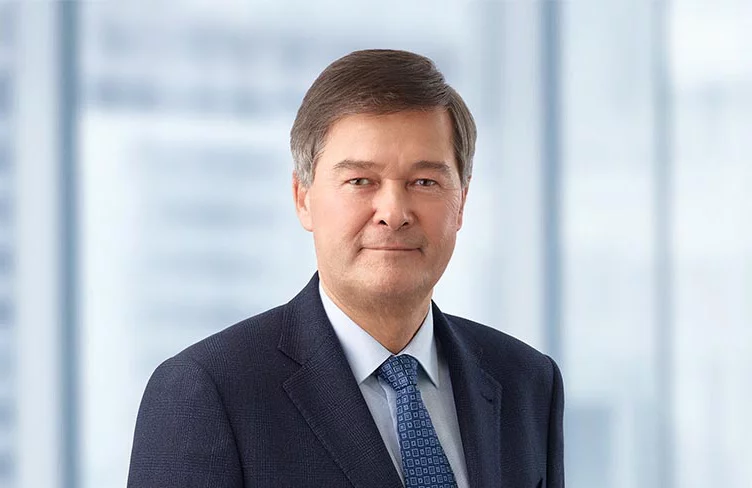
Jo Taylor
Président et chef de la direction, RREO
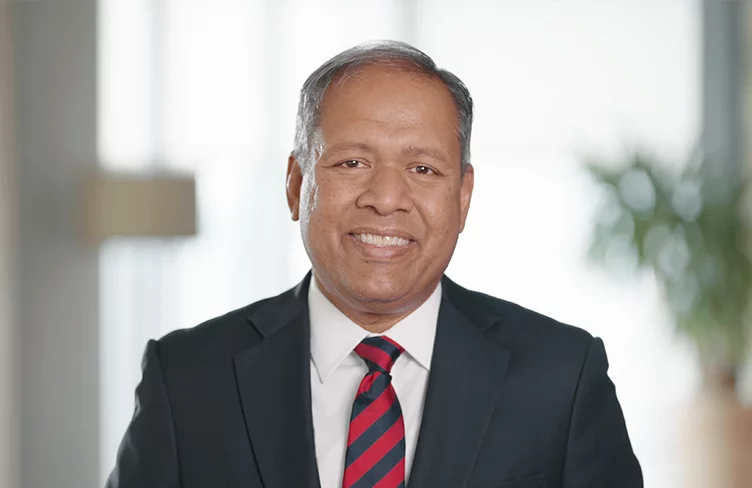
C.S. Venkatakrishnan
Chef de la direction du groupe, Barclays
-
Jo Taylor est président et chef de la direction du Régime de retraite des enseignantes et des enseignants de l’Ontario (RREO), l’un des investisseurs institutionnels les plus importants et les plus sophistiqués au monde. Il dirige une organisation de placement mondiale dont la mission à long terme est d’assurer la sécurité de la retraite de ses membres grâce à des portefeuilles de placement résilients et diversifiés et à des stratégies de service innovantes.
Arrivé au RREO en 2012, M. Taylor possède plus de 40 ans d’expérience dans le domaine des placements mondiaux et du leadership sur les marchés publics et privés. Il a joué un rôle central dans la croissance internationale et l’expansion stratégique du RREO, travaillant en étroite collaboration avec les équipes de direction pour améliorer le rendement des placements, les rendements ajustés au risque et l’excellence opérationnelle dans l’ensemble de l’organisation.
L’expertise de M. Taylor s’est affinée au cours d’une carrière menée en Europe, en Asie et sur le continent américain, où il a mené à bien de multiples stratégies de placement et de croissance commerciale. Avant de se joindre au RREO, il a travaillé pendant plus de 20 ans pour 3i Group plc, où il a occupé divers postes de direction du groupe.
M. Taylor est titulaire d’un baccalauréat ès arts (avec distinction) de l’Université de Londres et a par la suite obtenu un MBA de la Manchester Business School. Il a été président et administrateur non dirigeant de nombreuses sociétés, notamment Helly Hansen et Camelot.
-
C. S. Venkatakrishnan (« Venkat ») a été nommé chef de la direction du groupe de Barclays en novembre 2021. Il a rejoint Barclays en 2016 en tant que directeur des risques avant de devenir responsable des marchés mondiaux et coprésident de Barclays Bank PLC en 2020.
M. Venkatakrishnan possède une vaste expérience en gestion des risques et sur les marchés mondiaux, en particulier ceux sur lesquels Barclays opère. Il a précédemment travaillé chez JP Morgan Chase à partir de 1994, où il a occupé des postes de direction dans la gestion d’actifs, la banque d’investissement et la gestion des risques.
M. Venkatakrishnan siège au conseil d’administration de plusieurs organisations à but non lucratif, notamment le MIT CEO Advisory Board, FCLT Global et l’Institute of International Finance. En 2024, M. Venkatakrishnan a été nommé président du groupe de travail sur les services financiers dans le cadre de la Sustainable Markets Initiative, qui œuvre à rassembler les industries et les secteurs afin de mener l’effort collectif nécessaire pour mener à bien la transition vers la neutralité carbone.
M. Venkatakrishnan est titulaire d’un baccalauréat ès sciences, d’une maîtrise ès sciences et d’un doctorat du Massachusetts Institute of Technology.
Avertissement concernant le balado
Les renseignements fournis dans ce balado sont uniquement à titre informatif et ne visent pas à traiter de situations individuelles. Ces renseignements ne constituent en aucun cas une recommandation, une déclaration, une approbation ou une validation, ni une offre de vente ou une sollicitation d’offre d’achat d’un placement, d’un fonds ou de tout autre produit ou service.
Ils ne visent pas non plus à fournir, ni à se substituer à, une quelconque forme de conseil (financier, juridique, d’investissement, fiscal ou autre) et ne doivent pas servir de base pour prendre ou s’abstenir de prendre une décision de placement ou autre précise. Les auditeurs sont encouragés à solliciter l’avis d’un professionnel indépendant le cas échéant.
Le RREO ne fait aucune déclaration ni ne donne aucune garantie quant à l’exactitude, l’exhaustivité, l’actualité ou l’applicabilité du contenu. Toute confiance accordée aux renseignements fournis est aux risques et périls de l’auditeur.
Les points de vue et opinions exprimés par les intervenants invités leur sont propres à la date de publication et peuvent ne pas refléter ceux du RREO. Les invités peuvent détenir des positions dans les placements ou les sujets abordés.
Pour en savoir plus sur le Régime de retraite des enseignantes et des enseignants de l’Ontario, veuillez visiter le site www.otpp.com.
-
Jo Taylor : Bienvenue à L’école de la pensée, un balado proposé par le Régime de retraite des enseignantes et des enseignants de l’Ontario, dans lequel nous discutons avec des décideurs internationaux des occasions, des risques, des parcours professionnels et des leçons de leadership.
Je m’appelle Jo Taylor et je suis chef de la direction du Régime de retraite des enseignantes et des enseignants de l’Ontario. Je suis très heureux d’accueillir aujourd’hui mon invité, C. S. Venkatakrishnan. Il est le chef de la direction de Barclays. Mais plus encore, c’est un banquier très expérimenté qui a une vision fantastique du monde de la finance et de ce qui se passe en ce moment. Et, pour vous dire mon point de vue, j’ai toujours été un fervent partisan de Barclays. C’était ma première banque, et elle a été un excellent soutien pour le régime dans ses activités de placement dans des sociétés fermées. Bienvenue, Venkat.
C. S. Venkatakrishnan : Jo, merci beaucoup. Merci de m’avoir invité. Et merci d’être client de Barclays depuis 40 ans.
Jo Taylor : Merci de vous être occupé de moi pendant si longtemps. Merci. J’aimerais commencer par le début de votre histoire, si cela vous convient. Vous êtes né à Mysuru?
C. S. Venkatakrishnan : Mysuru.
Jo Taylor : Mysuru, qui n’est sans doute pas une ville en Inde que beaucoup de gens connaissent bien. Pourriez-vous nous en donner un aperçu?
C. S. Venkatakrishnan : Eh bien, je suis né là-bas, mais je n’y ai pas passé beaucoup de temps. C’est une charmante ville à l’extrême sud de l’Inde. Elle se trouve à environ 160 km au sud de Bangalore, qui est la grande capitale de la technologie, mais qui était alors une ville moins dynamique. J’ai passé la plus grande partie de mon enfance à New Delhi, qui était alors une belle ville verte relativement peu peuplée avec un ciel bleu clair.
Jo Taylor : Une grande partie de votre carrière s’est ensuite déroulée aux États-Unis. Vous aviez obtenu un diplôme fascinant dans un établissement prestigieux, le MIT. Il me semble que cela portait sur la modélisation mathématique ou l’organisation des activités pour les contrôleurs aériens, je crois.
C. S. Venkatakrishnan : Oui.
Jo Taylor : Qu’est-ce qui vous a mené à cela?
C. S. Venkatakrishnan : J’ai obtenu du financement, c’est toujours utile. Je suis allé au MIT comme étudiant de premier cycle et je ne savais pas très bien ce que je voulais faire. J’ai fait un peu d’informatique. J’ai fait un peu d’économie. J’ai fait un peu de ce qu’on appelle la science de la gestion, qui est l’optimisation mathématique. J’ai finalement poursuivi avec le dernier des trois et j’ai obtenu un doctorat en recherche opérationnelle, qui combine les statistiques et l’optimisation mathématique. Mais j’étais très intéressé par l’aspect économique. J’ai poursuivi dans cette voie. Puis, j’ai travaillé sur ce sujet intéressant pour lequel il y avait du financement, c’est-à-dire : comment ordonner les avions pour les faire atterrir dans un aéroport achalandé en les faisant descendre le plus rapidement possible, en toute sécurité? C’était vraiment intéressant, car à cette époque, je pouvais accéder aux tours de contrôle et utiliser un radar pour suivre les avions qui arrivaient à l’aéroport de Boston. Puis, dans les derniers kilomètres, le radar perdait leur trajectoire et nous regardions avec des jumelles pour vérifier l’heure de l’atterrissage. Nous avions donc des données sur le moment auquel un avion entre dans l’espace aérien et le moment auquel il atterrit, et nous devions déterminer comment mieux ordonner les atterrissages. C’était un sujet fascinant.
Jo Taylor : Alors, si nous prenons l’avion ces jours-ci, nous pouvons vous remercier si les avions atterrissent en toute sécurité et à l’heure.
C. S. Venkatakrishnan : Eh bien, je crois que vous devriez remercier les contrôleurs aériens. J’avais alors beaucoup de respect pour eux, et c’est encore plus vrai aujourd’hui, car je crois que le trafic est plus élevé.
Jo Taylor : Nous avons trouvé une phrase merveilleuse dans votre thèse, qui dit que, selon la pensée indienne, le professeur est au cœur de la réussite de toute initiative éducative. J’adore cette phrase. Merci. Étant donné que nous nous occupons des enseignantes et des enseignants, c’est très pertinent pour nous. Nous aimons aussi penser que nous sommes un établissement où l’on apprend. Il y a une question que j’aime poser aux autres parce que, dans mon cas, la réponse est affirmative. Dans votre vie, avez-vous connu une enseignante ou un enseignant qui vous a marqué, autrement dit, une personne qui vous a façonné, qui a influencé votre avenir?
C. S. Venkatakrishnan : Il y en a eu quelques-unes. Écoutez, c’est un grand honneur pour moi d’être impliqué dans le programme du RREO, de travailler avec vous et l’institution et d’être ici, parce que je crois que les enseignantes et les enseignants figurent parmi les personnes les plus fondamentales de notre vie, car elles ont une influence sur notre caractère, notre profession, ce que nous sommes. Oui. Quand on commence dans la vie, on voit les enseignantes et les enseignants comme des personnes qui nous donnent de l’information, qui nous éduquent, nous enseignent la lecture, l’écriture, l’arithmétique, les sciences. Et on arrive à un point, à un moment donné de la vie, où on se rend compte que ces personnes non seulement nous enseignent quoi faire, mais aussi comment le faire. Cela passe donc d’une compétence professionnelle à quelque chose qui concerne le caractère et le comportement, les manières de faire, la résilience et l’adaptabilité, et tout ce savoir-être qui vous aident beaucoup plus tard dans la vie. Parmi ces personnes, il est donc difficile d’en choisir quelques-unes, mais je vais le faire. Je dirai d’abord mes parents. Ils m’ont tous les deux transmis le respect des organisations, un respect pour le respect, si je puis dire, et aussi, un ensemble de valeurs. J’espère qu’à ce niveau, je ne les ai pas déçus. J’ai essayé de les décevoir quand j’étais jeune, mais j’ai eu un meilleur comportement depuis. Ensuite, je pourrais citer mes directeurs de thèse au MIT, qui étaient très bons. Ils toléraient un jeune homme qui essayait d’en faire trop, qui essayait de faire des choses qu’il n’était probablement pas entièrement capable de faire. Mais ils m’ont appris une chose très importante.
C. S. Venkatakrishnan : Et deux messieurs, Arnold Barnett et Amadeo Odoni, qui m’ont appris à communiquer simplement les choses. C’est une excellente compétence. Et, je n’oublierai jamais la première fois que j’ai eu l’occasion de le faire. C’était lors d’un galop d’essai de six heures pour ma première conférence universitaire, au Canada. J’allais à Montréal, et on m’a appris à présenter quelque chose en 15 minutes exactement. Ensuite, je suis entré dans la vie professionnelle. J’ai passé 22 ans chez J.P. Morgan. Vers la fin, dans les sept ou huit dernières années, j’ai eu le privilège de voir de près Jamie Dimon. C’est un dirigeant d’entreprise remarquable, un être humain remarquable. Il m’a impressionné par son intelligence, son dynamisme, sa personnalité et sa capacité à communiquer. Et je ne l’oublierai jamais. Lorsque je suis confronté à une situation difficile, je me demande ce que Jamie ferait.
Jo Taylor : Oui.
C. S. Venkatakrishnan : C’est une personne qui m’a fait une impression remarquable. Et ensuite, sans vouloir mettre personne dans l’embarras, chez Barclays, j’ai eu la chance d’avoir un très bon président de conseil, Nigel Higgins, qui m’a appris comment se comporter au Royaume-Uni, et m’a donné son point de vue sur la façon d’être chef de la direction et de gérer les parties prenantes. Il m’a beaucoup appris, et j’ai aussi beaucoup appris avec les gens qui travaillent pour moi, d’abord parce que ces personnes m’enseignent de nouvelles choses, ensuite, parce qu’elles m’apprennent comment l’organisation fait les choses.
Jo Taylor : L’autre chose que j’ai trouvée très intéressante dans tout ce que vous avez dit, c’est que vous aviez énormément de succès chez J.P. Morgan. Puis, la transition vers Barclays s’est faite, je crois, d’abord avec une certaine prise de risque pour l’organisation Barclays. La transition a-t-elle été facile pour vous? Je suppose qu’elle a été assez facile, car vos analyses tiennent compte de nombreux risques. Mais quels ont été les défis? Je pense, par exemple, au fait de quitter New York pour un autre pays. Cela a dû poser des difficultés.
C. S. Venkatakrishnan : Oui. C’est là que l’apprentissage se poursuit. J’ai appris grâce à ma femme et à mes enfants, qui me connaissent probablement mieux que quiconque et qui savent quand j’ai peur de prendre un risque, et ils m’encouragent. Pour cette décision d’accepter pleinement lorsque j’ai été appelé comme chef de la direction, je dois remercier ma femme qui a dit que je devrais prendre un risque en rejoignant une autre organisation. Je n’aurais jamais pensé devenir chef de la direction. Je n’ai donc pas pris de risque lié au domaine, à l’organisation. Mais, comme vous l’avez dit, j’ai pris un risque institutionnel et culturel en passant d’une organisation américaine à une organisation britannique, même si la présence américaine y est énorme.
Jo Taylor : Eh bien, vous êtes passé d’une position de force à une autre chez Barclays. Barclays couvre de nombreuses catégories d’actifs à l’échelle internationale, c’est une présence énorme, évidemment en Europe et en Amérique du Nord. Je suppose que, étant donné votre position, vous avez une extraordinaire capacité à observer et à dire ce qui semble être le bon niveau de risque à prendre, ainsi que les secteurs où vous pouvez peut-être encourager l’activité.
C. S. Venkatakrishnan : Je crois qu’il y a des risques, et nous pouvons en parler, tant du point de vue des activités que de la façon dont nous faisons des affaires. Les risques qui, à mon avis, sont très récompensés au fil du temps sont l’exposition à la technologie, tant du point de vue des sociétés technologiques que du financement des sociétés technologiques ainsi que de l’adoption et de l’utilisation de la technologie au sein de l’organisation. Si vous le faites rapidement et correctement, vous pouvez commettre des erreurs, mais c’est payant. Le deuxième élément consiste à prendre des risques tant pour les particuliers que pour les entreprises, en particulier les petites entreprises. Elles sont toutes déterminées et suivent une croissance favorable. Toutes les entreprises n’ont pas une réussite éclatante, mais en général, on peut comprendre les chiffres assez bien pour que cela fonctionne. Avec les grandes entreprises, vous devez prendre des risques là où vous comprenez les activités et voir si l’entreprise prend elle-même des risques, c’est-à-dire si elle investit elle-même dans son propre personnel, dans le secteur de la consommation et si elle utilise la technologie. Si tous ces éléments s’unissent, et cela s’applique autant aux pays qu’aux personnes et aux entreprises, alors je crois que ce sont des risques qui valent la peine d’être pris.
Jo Taylor : D’accord. Parlons encore des risques. Vous avez eu l’occasion d’observer des collègues des hautes directions et des organisations aux États-Unis et ici, au Royaume-Uni. On dit que les gens aux États-Unis prennent plus de risques que nos collègues ici? Est-ce exact? Est-ce justifié?
C. S. Venkatakrishnan : Non, je ne suis pas certain que ce soit justifié. Il y a beaucoup de choses qui sont très semblables entre Londres et New York. Vous voyez, ce n’est pas comme si on comparait les manières de conduire des côtés opposés de la route. C’est presque impossible de distinguer les manières de penser des gens dans le secteur financier. Il est tout à fait vrai qu’il existe aux États-Unis une culture du capital de risque et une profusion de capital de risque et de titres de sociétés fermées. Beaucoup plus qu’au Royaume-Uni. Par conséquent, il y a plus d’argent à faire, plus de capitaux à investir dans des entreprises en démarrage et une propension à tolérer l’échec.
Jo Taylor : Oui.
C. S. Venkatakrishnan : Si vous prenez une institution comme une banque, qui joue un rôle différent dans la courbe de rendement des risques, je ne crois pas que ce soit si différent. Je crois qu’au Royaume-Uni, on prend des risques extraordinaires depuis de nombreuses années. Le Royaume-Uni n’est pas devenu aussi puissant à l’échelle mondiale qu’il ne l’a été sans prendre de risques. Peut-être que nous pourrons en parler un peu plus tard du point de vue de la gestion des actions et de leurs propres placements. On pourrait en dire plus.
Jo Taylor : Parlons-en maintenant en commençant peut-être par un autre domaine, car nous sommes évidemment un régime de retraite. Vous savez, nous devons établir un seuil de risque pour respecter les limites. La pire chose que nous puissions faire, c’est de créer une situation où les participantes et les participants ne peuvent pas toucher leur rente lorsqu’elle arrive à échéance. Comment voyez-vous le monde des rentes au Royaume-Uni par rapport à ce que vous voyez, par exemple, de la part d’organisations comme la nôtre au Canada et plus largement en Amérique du Nord?
C. S. Venkatakrishnan : Je crois qu’au cours des 30 à 40 dernières années, la plus grande différence qu’on ait pu remarquer est que la culture de la prise de risques liés aux placements a diminué au Royaume-Uni. Je crois que de nombreuses études universitaires ont montré qu’une exposition importante aux marchés boursiers, soit 60 % ou plus, est plutôt appropriée pour les gens tout au long de leur vie. Cela changera à différents moments de leur vie. J’ai examiné votre portefeuille et vos résultats de fin d’exercice, et je me trompe peut-être, mais vous avez une assez forte exposition aux actifs à risque. Je crois qu’il y a d’abord environ 40 % d’actions de sociétés ouvertes. Puis, si vous ajoutez les titres de sociétés fermées et les marchandises, la proportion est beaucoup plus élevée et il y a un peu d’effet de levier. Je ne sais pas quel est le bêta de vos actions sur le marché public, mais j’imagine que c’est comme s’il s’agissait d’un portefeuille d’actions à 70 ou 75 %. Si vous regardez le régime de retraite typique au Royaume-Uni, cela compte pour environ 40 %, ce qui, à mon avis, est inférieur à ce que cela devrait être. Et je crois que, pour les particuliers, c’est encore moins élevé si l’on regarde leur bilan personnel et leur exposition indirecte au titre des rentes. Je crois que cela a coûté cher aux particuliers du Royaume-Uni en matière de rendement perdu. Chez Barclays, on parle de centaines de milliards de livres sterling dans des compte-chèques et des comptes courants qui pourraient être investis. Il en coûte aux sociétés britanniques en raison du manque d’investissement dans les sociétés et de formation de capital, en particulier pour les petites entreprises. Cela se traduit dans la façon dont les gens parlent des marchés des actions britanniques. Les Britanniques ont une banque comme la nôtre qui verse des dividendes depuis 330 ans, ce qui est très bien. Nous sommes heureux d’être ici, mais il devrait y avoir beaucoup plus de sociétés technologiques.
Jo Taylor : Absolument.
C. S. Venkatakrishnan : Oui.
Jo Taylor : Puisque nous faisons le tour du monde, j’aimerais avoir votre point de vue sur la grande nation du Canada. Oui. Je sais qu’il a été question de devenir le 51e État ou autre chose. Mais quelle est la place du Canada dans la vision mondiale de Barclays? Peut-être pourriez-vous nous en parler un peu, car je suis certain que les personnes qui nous regardent trouveraient cela intéressant.
C. S. Venkatakrishnan : Oui. Vous savez, nous sommes au Canada depuis plus de 90 ans. De nombreuses personnes distinguées ont siégé à la présidence de Barclays au Canada, notamment Michael Wilson, qui a été ministre des Finances du Canada. Nous sommes présents dans le domaine des services bancaires de placement à Toronto et, enfin, nous avons une activité dans ce domaine en Alberta, à Calgary. Nous couvrons donc le Canada depuis très, très longtemps, et nous sommes présents à Londres, à Toronto et, bien sûr, à New York. Écoutez, le Canada est, à mon avis, non seulement l’une des grandes nations du monde, mais aussi un endroit formidable pour faire des affaires. Vous avez des sociétés qui couvrent l’économie très traditionnelle, des minéraux et des ressources naturelles, et l’économie très moderne, notamment certaines sociétés technologiques très intéressantes, ainsi qu’un secteur financier robuste. C’est en soi une force dans le monde : il y a vous et les grandes caisses de retraite canadiennes, ainsi que les grandes banques et les grandes sociétés d’assurance canadiennes. Le Canada cherche à se diversifier par rapport aux États-Unis, par des moyens directs ou indirects pour attirer plus d’entreprises au Canada et déplacer les actifs canadiens partout dans le monde. Nous croyons qu’il s’agit d’une excellente occasion pour le Canada. Nous pensons que Barclays peut contribuer à ce mouvement. Et sur le plan des entreprises et des particuliers, c’est très, très important. J’ajouterais que vous avez connu un changement de gouvernement assez récemment. Bien entendu, le premier ministre Carney connaît très bien le Royaume-Uni, puisqu’il a été gouverneur de la Banque d’Angleterre. Il a étudié ici il y a de nombreuses années. Cela étant dit, votre approche à l’égard du monde est également relativement stable. On peut toujours dire que les relations avec le pays X ou Y ont un peu changé, mais sur une longue période, le Canada a été l’une des sociétés les plus ouvertes sur le plan économique et en matière d’immigration. C’est votre grande force.
Jo Taylor : Je suis heureux que vous voyiez le Canada d’un bon œil. Je sais que c’est une grande priorité pour le gouvernement fédéral d’essayer d’attirer des capitaux vers le pays pour soutenir les projets de développement national. C’est un élément important pour renforcer notre économie et, en fait, dans le cadre de certaines négociations commerciales, il est probable qu’une certaine transition s’amorcera ou des changements de droits de douane devront être réglés dans certains secteurs. Oui. Oui.
Jo Taylor : Revenons sur un autre sujet. Au RREO, nous tenons fermement à avoir les bonnes valeurs. En tant qu’institution, nous nous efforçons d’investir dans de bonnes sociétés qui peuvent croître, prospérer et aider leurs communautés locales. Nous soutenons les entreprises de la bonne manière. Donc, si nous revenons à Barclays, quelles valeurs essayez-vous d’encourager auprès de vos collègues? Vous avez dit que vous pouvez apprendre auprès de vos collègues aussi bien que vous pouvez les aider à croître et à se perfectionner. Mais, selon vous, quelles valeurs se dégagent comme les plus importantes pour votre institution?
C. S. Venkatakrishnan : Alors, je crois qu’il y en a plusieurs. Nous sommes une banque, donc nous devons toujours faire preuve d’intégrité. Nous devons toujours respecter l’éthique. Nous servons également des millions de clients. Alors, ce que je dis toujours, c’est qu’il faut offrir aux clients des produits qui leur conviennent et qui servent leurs objectifs. Voudriez-vous que votre grand-mère s’endette auprès de vous? Voudriez-vous que votre grand-mère détienne une carte de crédit auprès de vous? C’est ce genre de choses. Oui. Vous devez faire preuve de transparence dans vos transactions. Puis, à l’interne, vous devez travailler avec vos collègues de façon ouverte et éthique. Et, le plus important, c’est d’assumer la responsabilité.
Jo Taylor : Oui.
C. S. Venkatakrishnan : C’est un devoir. Surtout d’assumer la responsabilité lorsque les choses tournent mal. Vous n’êtes pas entièrement responsable de ce qui a mal tourné, mais assumez la responsabilité et corrigez la situation. Et, pour revenir au sujet des actions, l’une des questions concerne le montant d’actions de sociétés ouvertes que vous devriez détenir dans le cadre de votre portefeuille. Mais au cours des deux dernières années, nous avons donné à chaque employé de Barclays un montant de 500 livres sterling d’actions dans l’entreprise. Heureusement, les actions se sont bien portées. Une partie de l’enjeu consiste à faire comprendre aux employés que leurs valeurs et leurs comportements ont une incidence sur les résultats, et qu’ils s’en sentent responsables.
Jo Taylor : C’est une excellente idée. Oui. C’est une véritable mobilisation des parties prenantes.
C. S. Venkatakrishnan : Une véritable mobilisation.
Jo Taylor : Je m’en voudrais maintenant de ne pas vous poser la question de Jamie Dimon. Dernièrement, les gens se sont demandé si le crédit leur permettait d’obtenir ce dont ils ont besoin. Oui. Comment percevez-vous le crédit et, plus précisément, comment faites-vous pour comprendre suffisamment ce dans quoi vous investissez?
C. S. Venkatakrishnan : Je dirais deux choses. Tout d’abord, j’ai de l’expérience dans le secteur des titres à revenu fixe, alors j’ai eu à m’occuper de titres de créance, les bons comme les mauvais jours. Les titres de créance comportent inévitablement des risques, car, peu importe le niveau de votre étude sur une entreprise, un pays ou un individu, les circonstances changent. Vous prêtez sur une longue période. Vous essayez de prévoir ces changements de circonstances. Vous espérez que les effets de mise en commun des portefeuilles vous aideront. Il n’y a donc que quelques œufs pourris, et c’est ce qui vous donne le rendement pour le risque que vous prenez. Et il y a des procédures à respecter. Je dirais que j’ai deux règles en matière de gestion du risque. La première règle est de ne jamais perdre plus d’argent que prévu. Et si cela arrive, c’est un problème. Ensuite, vous ne devez jamais perdre de l’argent d’une façon que vous n’aviez pas prévue. Vous devez donc comprendre les risques. Et je crois que la plupart des formes de prêt vous permettent de comprendre la situation de l’emprunteur, qu’il s’agisse d’une entreprise ou d’un individu, et de faire des prévisions raisonnables quant à ce qui se produit. Si vous traitez avec des sociétés ou des modèles d’affaires plus opaques, en particulier dans les secteurs de la technologie pour lesquels des hypothèses sont faites sur la croissance technologique, c’est plus difficile, et, dans ce cas, votre prise de risque doit être compensée. Le plus important, c’est lorsqu’on ne peut pas comprendre les risques. Il faut alors faire très attention. Nous avons ainsi été exposés à deux fraudes, l’une d’elles aux États-Unis, et l’autre ici à Londres. Ce qui est intéressant au sujet de ces fraudes, c’est que, à partir du moment où les soupçons de fraude sont apparus, jusqu’au moment où nous avons compris, il a fallu de nombreux jours aux juricomptables pour comprendre ce qui s’était passé. Donc, s’il y a une fraude, en particulier pour des petites entreprises dont les modèles d’affaires et les contrôles financiers sont plus faibles et qui ne respectent pas les normes les plus élevées, il est très difficile pour un prêteur de le savoir à l’avance. Donc, s’il y a un soupçon, on ne s’engage pas. Et je crois que chaque génération qui travaille dans les titres de créance est condamnée à apprendre ces leçons à nouveau. Et j’en ai été témoin. Je suis arrivé dans ce secteur en 1994. J’en ai été témoin dans les marchés émergents en 1994, puis encore une fois en 1997, avec le .com en 2001, la crise financière de 2008, l’Europe, la Covid. Et ainsi de suite.
Jo Taylor : C’est vrai. Excellente analyse. Revenons à l’une des choses dont vous avez parlé à quelques reprises. Encore une fois, je m’en voudrais de ne pas vous demander votre point de vue sur ce grand sujet qu’est la technologie. Et inévitablement, dans le domaine de la technologie, le sujet de discussion actuel est l’intelligence artificielle. Je crois qu’il y a beaucoup de débats sur la meilleure façon d’utiliser l’intelligence artificielle. Est-ce une façon d’améliorer l’efficacité de votre entreprise? Dans quelle mesure pouvez-vous utiliser l’intelligence artificielle pour prendre des décisions que les humains sont probablement moins aptes à évaluer? Quel est votre point de vue sur le sujet? Il y a plusieurs manières de voir les choses, et je crois que bon nombre des avantages plus immédiats que nous avons constatés sont liés à l’efficacité par rapport aux coûts, plutôt qu’à la question de la prise de décisions.
C. S. Venkatakrishnan : Franchement, je ne sais pas. Ce que je crois savoir, toutefois, c’est que cela constituera un atout en améliorant les activités et la façon de servir les clients. Je crois qu’il y a trois aspects à cela. Le premier est celui de l’adoption. Votre organisation se dote-t-elle des outils? Les employés sont-ils formés à leur utilisation? Et les voyez-vous vraiment utiliser ces outils? Et une chose intéressante, voire mystérieuse, est que les gens utilisent beaucoup plus l’intelligence artificielle dans leur vie personnelle que dans leur vie professionnelle.
Jo Taylor : Oui.
C. S. Venkatakrishnan : Vous cliquez toujours sur l’intelligence artificielle dans Google pour obtenir votre réponse. Donc, l’adoption est le premier aspect. Le deuxième aspect est celui des infrastructures. Obtenez-vous les données de la bonne façon, dans le bon format, avec les bonnes plateformes de calcul, etc., pour pouvoir les utiliser? Le troisième et le plus important des aspects est le suivant : pouvez-vous réellement trouver des cas d’utilisation à forte valeur pour lesquels vous abandonnez l’ancienne méthode pour utiliser la nouvelle en lui accordant toute votre confiance? C’est l’aspect le plus difficile. Nous travaillons sur ces trois aspects.
Jo Taylor : C’est vrai.
C. S. Venkatakrishnan : Maintenant, nous trouvons des cas où le travail réalisé est meilleur. Par exemple, nous avons une façon de surveiller les transcriptions de tous nos appels du service à la clientèle afin de donner de la rétroaction à notre agent du service à la clientèle au lieu de nous contenter d’un échantillonnage de deux ou trois appels. Cela ne réduit pas le nombre de personnes, mais nous espérons que cela améliorera l’expérience et le processus de service à la clientèle, car nous pouvons tout examiner.
Jo Taylor : Eh bien, je crois qu’il y a aussi un peu d’anxiété en ce moment, qui est attribuable à la puissance et à la sophistication des modèles d’intelligence artificielle. Comment pouvez-vous vous assurer que votre logiciel est sécurisé contre des tiers ou même des partenaires avec lesquels vous travaillez et dont la plateforme est réellement vulnérable? Je suis certain que la plupart des conseils d’administration qui examinent leurs pratiques en matière de gouvernance se demanderont avec quelle rapidité nous pouvons obtenir une réponse à cette question très importante.
C. S. Venkatakrishnan : Écoutez, c’est une question très importante. Tout comme le travail que vous faites peut s’accélérer, le travail que des gens peuvent produire contre vous s’accélère aussi. Cela signifie que vos défenses doivent s’accélérer, s’améliorer. L’important, ici, c’est d’utiliser les outils dont nous disposons, et il y en aura de nouveaux. Si on essaye de comprendre notre propre vulnérabilité, curieusement, ce qu’il en ressort, c’est que l’un des domaines où la vulnérabilité est plus grande est le code source ouvert, qui est l’un des facteurs qui ont rendu la programmation beaucoup plus efficace au cours des dernières décennies.
Jo Taylor : C’est vrai.
C. S. Venkatakrishnan : C’est la possibilité de trouver et d’utiliser un code normalisé, de l’emprunter à partir de sites Web, etc. Mais ce sont ces endroits où, si une vulnérabilité est décelée, elle peut toucher le plus grand nombre de personnes. Alors, les gens se tournent-ils davantage vers leurs propres programmes comme moyen de défense? Et pour revenir à votre question précédente, cela signifie-t-il que vous avez besoin de plus de codeurs?
Jo Taylor : Oui.
C. S. Venkatakrishnan : La réalité, c’est que toutes les entreprises d’aujourd’hui interagissent beaucoup plus par voie numérique avec leur clientèle qu’auparavant. Qu’il s’agisse de vendre leurs produits, d’accepter des paiements et, par conséquent, d’avoir des défenses numériques, c’est beaucoup plus important. Je crois que ces choses sont très préoccupantes, et il est important que les entreprises réagissent rapidement pour que nous coopérions de façon sécuritaire. Dans le système bancaire, nous sommes de cet avis. Ce sujet prendra probablement encore plus d’importance dans les discussions du conseil à l’avenir.
Jo Taylor : Et on le voit avec nos participantes et nos participants qui utilisent maintenant beaucoup plus de moyens numériques. Nous faisons en sorte qu’ils soient à l’aise, en sécurité et en mesure d’obtenir des réponses de bonne qualité à leurs problèmes. Je vais conclure, si vous me le permettez pour m’amuser un peu, en aidant tout le monde à mieux vous connaître. J’ai pensé vous poser quelques brèves questions.
C. S. Venkatakrishnan : Oh!
Jo Taylor : Dites simplement la première chose qui vous vient à l’esprit. Laquelle de ces deux options choisiriez-vous, si vous aviez le choix? Dans certains cas, c’est très facile. Chat ou chien?
C. S. Venkatakrishnan : Chat.
Jo Taylor : Plage ou ville?
C. S. Venkatakrishnan : Plage.
Jo Taylor : Bière ou vin?
C. S. Venkatakrishnan : Bière, non alcoolisée.
Jo Taylor : Théâtre ou cinéma?
C. S. Venkatakrishnan : Cinéma.
Jo Taylor : Pour terminer, pub ou karaoké?
C. S. Venkatakrishnan : Pub, n’importe quel jour.
Jo Taylor : Super. Je vous remercie infiniment d’avoir participé au balado d’aujourd’hui. Vos réflexions sont passionnantes. Vous avez une vision très, très perspicace du secteur financier. Et vous dirigez un établissement très important, en particulier au Royaume-Uni, et évidemment à l’échelle internationale. Comme nous nous le sommes déjà dit, nous avons une excellente relation de travail ensemble, et notre équipe vous en est très reconnaissante. Je vous souhaite bonne chance pour l’avenir. Merci de nous avoir accompagnés aujourd’hui, et j’espère que vous pourrez vous joindre à nous bientôt pour un autre de nos balados.
Jo Taylor : Nous espérons que cet épisode vous a plu. Abonnez-vous et suivez-nous partout où que vous soyez.